BROADCAST ON AM RADIO
RIVERSIDE
SAN BERNARDINO MARKET

At the beginning of your program, at the beginning of each segment and at the end of your program, use the old rule that works for giving speeches:
(a) Always open with a synopsis of the program. (Tell them what you are going to tell them)
(b) Stick to your outline and move the program along so your audience will hear the subject matter promised -
(Tell them what you told them you were going to tell them)
(c) At the end of each hour and at the end of your program, make sure to thank all of your guests and callers - then summarize the program. (Tell them what you told them) and always mention the program that will air after your program ends.
Most people listen to a radio program on the run; a few minutes at a time. Others use it for background noise. Those who really listen and concentrate on the program for an extended length of time are the MINORITY of your audience. That minority of listeners will download your podcast to listen for the full hour so mention it frequently and how to download it free from the KCAA website.
Most radio listeners are under the same pressures you face each day. Your radio program is a momentary distraction..This is why radio audiences are measured by “AQH”, the number of people who listen during a quarter hour and by “cume”, the cumulative number of people who listen at some time during the week.
Prepare your program in advance. Commit to spending three minutes of preparation for every one minute you spend on the air. Rehearse! Try out your program ideas on friends and family who will offer candid responses and suggestions.
Go into each hour on the air with enough content to last two or three hours. If you are interviewing a guest, prepare enough questions to last much longer than the planned length of the interview. This is the proven method to keep the program moving at the proper pace and to guard yourself against “yes” and “no” answers from a shy guest. This also protects you on a low volume call-in day. If you have too much content left over, plan another show on the same subject. If you can't find a guest for your particular topic, the helpful staff at www.guestmatch.com will be happy to assist absolutely free! You can email your request for a guest on a certain topic to [email protected] or call toll free (800) 372-8128.
Always be mindful that your program is a business. It's essential to create a business plan around your program that includes long term sponsor or product support. Establish some financial goals and reasonable timelines for reaching your goals. You may want to incorporate your show and sell a percentage of it to investors or use online fund raising services like these.
Establish a business plan that covers the cost of your airtime before you sign a contract with KCAA so you can concentrate on your program content and the future ROI of your sponsors and yourself. You will not be a success overnight. However, you will succeed if you make a long-term commitment of time, enthusiasm and money. You may want to start with a lead based revenue generator such as http://www.infoworx.com that pays you for phone calls your program generates for their clients.
All the time and money in the world won’t make up for a boring or poorly executed program. Most new talk show hosts make the common mistake of talking to their guest/and or caller in a way that makes the listener feel excluded. When this happens, the radio show sounds like a private conversation between two people, like eavesdropping on a telephone extension. Try to draw individual listeners into the conversation. If your monologues are provocative you will generate calls You will discover that callers generate more calls and build the energy of the program. During your interviews, pretend you are having a conversation with one individual listener and the guest/caller, because from the perspective of the individual listener, that is exactly the situation. It may be necessary to set up callers in advance. When you hear people call into major shows and sound too polished to be spontaneous, you can be assured they were set up in advance. Some are the board operators at affiliate stations.
It all boils down to having a conversation with your audience that holds their attention. This is very difficult to do if you talk at your audience and even more difficult to do if you seem to ignore your audience.
For God’s sake, never say, “For all you folks out there in radio land” You don't increase your audience by insullting those you disagree with politically. Make those comments Facebook if you must but respect your listeners. Profanity is prohibited.by law.
Don’t get distracted by your chat room. You may have a dozen people signed in on the chat room, which is quite an ego builder, but you will have at least several hundred or possibly thousands of people listening to you over the air. Would you stop a speech in front of 1,000 people to answer a text message? So,respond to texts and chats but move on quickly..
Announce your phone number when you're going into a commercial break and when you return from the break. Don’t beg for callers. If your program is provocative and interesting, listeners will continue to listen but they may not call you. Don IMUS tell his listeners, "It's my job to talk and it's your job to listen".
Giveaways from sponsors always help to generate calls. Teasing upcoming shows and giveaway promotions is another way to keep your listeners coming back and to build a loyal listener base. A lottery is illigal so don't do it. A lottery combines , consideration, chance and reward..
Always assume you have an audience, especially when you don’t get calls or if your sponsor/advertiser doesn't’ get results. Advertiser results and phone responses stem from listener trust and their comfort level with you and their need for the product. . This takes time to develop. IT IS NOT EASY!!
Don’t allow anything to take your attention away from your most important task, and that is to produce the best program possible show. It is all about your air sound. If you are on video, show up in your best clothes. Don't appear like you are participating in a community car wash.
Self promotion is essential. The days are long past when you could open the microphone and expect instant results. We live in an ocean of media and you must aggressively compete for attention. You must find ways to make your program known and make it a priority in the lives of as many people as possible. The social networks like Facebook and LinkIn and Twitter are essential methods of self promotion. You should use them for all they are worth and do so daily. Also,YouTube is the second most used search engine in the world, just behind Google. Use it to promote yourself and you will benefit
Here are a few more promotional tools. This Facebook tool will help you add to your fan base.
http://www.spreaker.com Spreaker offers a group of services that support numerous aspects of your program. The company’s support services will add depth to KCAA’s multi media platforms.
There are two services that will enhance your twitter account. The first is called http://www.twitlonger.com This service allows you to post long tweets and it’s great to have when you need to publish longer promotional articles about your program.
Here is your mobile twitter sign up page… https://mobile.twitter.com
Here is a service that allows you to add twitter followers and follow others in bulk while removing fake and other undesirable followers. www.manageflitter.com This service is important for anyone wanting to quickly add thousands of Twitter followers.
This next site will publish your bio and it’s free. http://about.me
https://kindlepublishing.amazon.com This site allows you to publish your blog directly to kindle.
https://accounts.google.com Use Google to track and calculate your website visitors and demographics
KCAA will help, but we can’t do it all. You must be ready to do everything you can to promote yourself and your program, Start by getting yourself interviewed on KCAA's Morning Show and other KCAA shows. Offer to interview other show hosts in exchange for your time on their show, Distribute press releases about your program. Trade out print ads about your program in trade publicatrions, newspapers and local television where possible. Remember, they need to advertise too!. Think of every legal way to promote your program. Think of ways to get free press. The press should be exploited. Ask any politician.
Have you thought of getting trade outs for signs on the back of busses? Have you thought of making a trade for commercials with a car dealer who would agree to leave a brochure about your program in the seat of every auto they repaired or sold?
Have you thought of asking a car dealer to set the radio dial on every car repaired or sold to 1050 AM or on the KCAA TuneIn channel on new cars? For female on-air personalities, what about leaving brochures at your hair and nail salons? Almost all neighborhood vendors are willing to let you leave a small stack of promotional materials on their counters. Many will allow you to put posters in their windows. Offer them a few spots on the air for the privilege. KCAA will help here too, We always offer freebies to sweeten the deal for your advertisers. With the Internet exploding around us KCAA can be heard in most homes and and an increasing numberof cars and trucks that have built in Internet. With our big Austin based servers and back up cloud servers, we can handle all the Internet traffic you can generate, just don't use robots to generate fake traffic. .
Promote yourself like you were running for a public office. In many ways, you can relate the self-promotion necessary to be successful in radio to running a successful political or issues campaign.
A side note here; in many ways, volunteering your services to a political or issues campaign provides you with an experience that parallels the promotion/campaign necessary to be a successful independent broadcaster.
Realistically, radio is simply the bottom rung on the show business ladder. In the long run, listeners must like you enough to vote with their radio dial and Internet visits and by supporting the products you sell. In essence, your radio program on KCAA is ½ “Show" and ½ "business" and to be a successful broadcaster, you must succeed on both fronts.
Since radio is ½ show and ½ business, you need certain talents to be successful. YOU DO NOT HAVE THE LUXURY OF THE COP-OUT, "I hate to sell” or “I can’t sell”. If you start with that attitude, you will fail, period! The best sales person you will ever have is looking at you in the mirror every morning. Ignore any tapes that might be running in your mind that say "I can’t sell", just go out and do it. On average, you will have to make 15 calls before you'll get one or two "be-backs". Keep making the calls and always follow up with the be-backs. Keep a daily diary of every sales call you make and review it daily. Without it you will get lost and lose sales. This is tried and true system. It works, so use it..
You can hire bird-dogs, which is slang for a person who will get leads under your direction. You can hire a salesperson, however, NEVER depend exclusively on a sales person or a bird dog. No one can sell you like YOU. For the first 2/1/2 years, I was KCAA's only sales staff. The occasional sale that walked in the door was the only exception. In other words, I worked 2 ½ years before I hired anyone to sell for KCAA.
I was astounded recently to learn that one talk show host at KCAA was actually playing solitaire while on the air. Another was watching the Fox News (at our NBC station!) during a board shift. Yet, another was passing time on a personal phone call and taking care of private business matters while producing a live show. This is simply not acceptable. Would it be proper to do this in front of a crowd? Certainly not, so don't do it while you are on the air at KCAA. Remember, even though you can't see your listeners, they are listening and grading you to determine if you are worth their time. Many are watching you on the KCAA TV webcam. Talk to the camera as much as possible. Your audience is behind the camera, not in your chat room or in the studio control room. Move your head and body as little as possible. Don’t fool yourself. listeners and viewers can can hear and see the difference between someone who is “phoning it in” and someone who is giving 100% to their performance. Listeners can actually hear differences between the sound of a host who stands and a host who is seated during a performance. The sound of a host who stands during the performance delivers a sense of immediacy or urgency that is difficult to duplicate while seated.
We will be excited to help you organize and launch your program. We are here to help you so please email [email protected].
Here are some suggested spot rates
KCAA RATE CARD
Effective November 5th, 2021
MONTHLY
50 SPOT ANNOUNCEMENTS
LENGTH EACH TOTAL
10 SECONDS $10.00 $500
30 SECONDS $25.00 $1250
60 SECONDS $40.00 $2000
Ask about our $6.25 rate special.
Ask about our "Dollar a Hollar" overnight special.
100 spot packages should be reduced by 15% with cash at signing
13 WEEK RATE
25% DISCOUNT FOR CASH WITH ORDER OF 300 SPOTS OR MORE
FIXED TIME LIVE READ SPOTS
$65.00 per minute
You get one free for each one you buy
KCAA Hourly Rates
$150.00 to $200.00 per hour (based upon day part)
One half hour shows
$125.00
Prime Time 13 week contract rate is $200.00 per hour for a total of $5,200.00
Programmer pays 1/3 in advance which totals $1,733.33
Programmer earns a 10% discount If contract is paid in full at signing in the amount of $4,680.00
Discounted hourly rate if contract is paid in full at signing... $180.00 hour
Standard 26 week contract rate is $175.00 per hour for a total of $9,100.00
Programmer pays 1/6 in advance which totals $1,516.00
Programmer earns a 15% discount If contract is paid in full at signing in the amount of $7,735.00
Discounted hourly rate if contract is paid in full at signing... $148.75 hour
Standard annual contract rate is $150.00 per hour for a total of $15,600.00
Programmer pays one month in advance which totals $1,300.00
Programmer earns a 25% discount If contract is paid in full at signing in the amount of $11,700.00
Discounted hourly rate if contract is paid in full at signing... $112.50
Each of the above terms is renewable for one additional term at the same rate.
Thank You For Listening
Here Are Some Tips For A Successful Local Talk Show
As the CEO of KCAA; I have a vested interest in the success of your show. First, the most important software you will need is a good digital editor. The best one for independent broadcasters is called Audacity. You may download a Windows version here.
A full selection, based upon your operating system is also available..
Every day, I hear locally produced shows on KCAA that could be greatly improved in order to increase listeners and gain advertiser support. See KCAA's Aaron and Kelly set the gold standard here
(1) Format your show by segments into an hourly pie chart. In radio, we call it a “clock”. This allows listeners to expect the same thing each day at a certain time during the hour. For example, if you conduct regular guest interviews, start them at the same time after the top of the hour, followed by listener call-ins, more interview and more listener call-ins. This is an over-simplification, however the idea is to create a program "rhythm" and to be predictable.

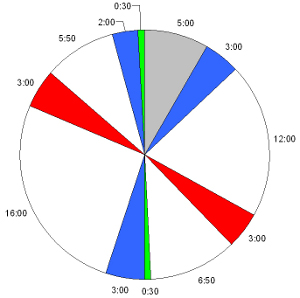
Program
5:50
Program
12:00
Program
16:00
Program
6:50
News
Optional
Network
3m
Network
3m
Local
Local
L
o
c
a
l
Hello! KCAA serves the Inland Empire region of Southern California in the Riverside/San Bernardino radio market.
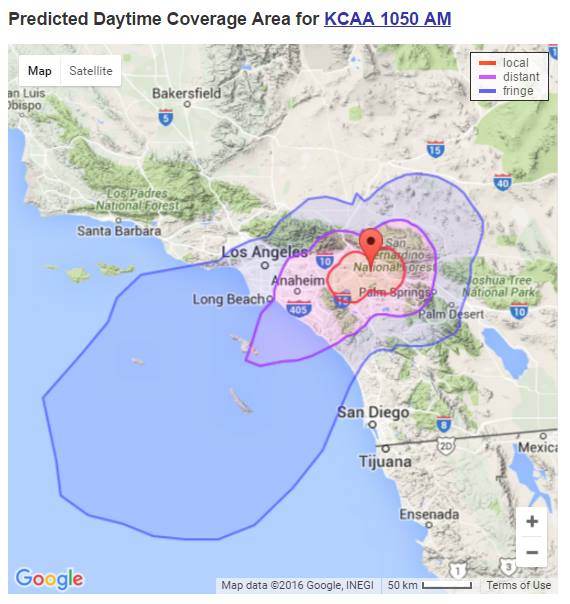
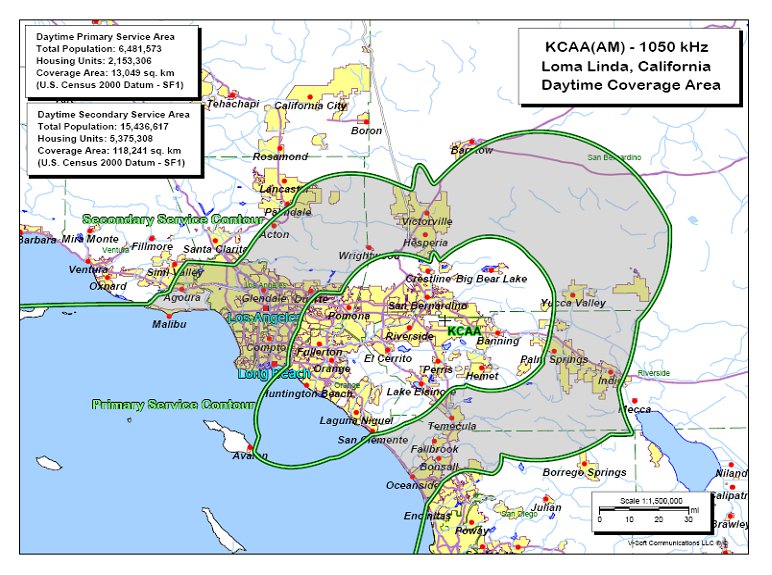
We invite you to host a radio show on KCAA, a successful "stand alone" AM Radio Station. KCAA 1050 AM Radio is the GO-TO News-Talk station for the Inland Empire region of Southern Ca. Please review all our audio and video services. We provide a great listener experience which is enhanced by numerous, state of the art audio and video platforms. KCAA is the exclusive NBC News affiliate for the Inland Empire region of Southern California, which is market # 26, otherwise known as the Riverside/San Bernardino market. The KCAA signal also reaches into portions of the Los Angeles and Palm Sprngs Market.
KCAA broadcasts some of the highest rated shows in the history of American Talk Radio. If you choose to air a program at KCAA, you will be listed along side the top ranked talkers. At KCAA, we guide you through the process of establishing yourself as a professional talk show host. We provide full hourly blocks of airtime for $75.00 to $200.00, depending upon when your program is aired. Contact [email protected].
KCAA is licensed to Loma Linda, California but our Internet stream finds listeners in more an 174 countries. KCAA is an independent station. We're not owned by Wallstreet. We make all programming decisions in house.
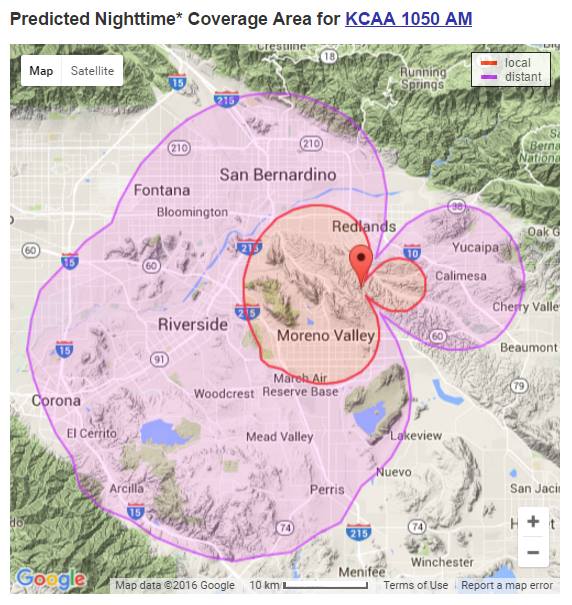
Our transmitter is located mid-way between Moreno Valley and Redlands, California in the heart of the Inland Empire. Our studios are located in San Bernardino.at the Carousel Mall. Call us there at (909) 383-1065 and ask for Mark Westwood, GM.
KCAA produces more than 50 local programs each week on subjects ranging from political talk to vegan diets, organic farming, general health, raw food preparation and nutrition shows, marijuana legalization issues, a shopping show, and of course, a very "serious" show filled with Hollywood gossip.
KCAA's daytime signal reaches over five million people on 1050 AM in Riverside, San Bernardino, and Orange counties.
Our Broadcasters are second to none.
Sheila Mac Weeknights 5-6 a.m.
Stephanie Miller Weekdays 6-8 a.m.
Get Balanced with Dr. Marissa Weekdays 8-9 a.m.
Controlled Chaos Weekdays 9-10 a.m.
Thom Hartmann Weekdays 10-11 a.m.
Del Walmsley Radio Weekdays 11-12 p.m.
Sheila Mac Weekdays 12-1 p.m.
KCAA Productions Weekdays 1- 2 p.m.
Randi Rhodes Weekdays 2-3 p.m.
Taheebo Tea Show Weekdays 3-4 p.m.
KCAA Productions Weekdays 4-5 p.m.
Think Big Weekdays 5 to 6 p.m.
KCAA Productions Weeknights 6-9 p.m.
House of Mystery Weeknights 9-10 p.m.
Opperman Report Weeknights 10-11 p.m.
America Tonight Weeknights 11- 12 a.m.
Cannabis Connoisseur Weeknights 12-1 a.m.
Praise Cathedral Worship Weeknights 1- 5 a.m.
Our call-in number is (888) 909-1050
We air many local programs every day so tune in any time!
KCAA's weekday programs attract listeners of age 35 years and older.
Our weekend programming includes music and variety programs that attract ages 18 to 34.
Most of KCAA's audience is comprised of well-established, long-term residents.
Our station airs a wide variety of programming (both political and non-political) that represents liberal, conservative, libertarian and independent points of view.
A one minute ad rate ranges from $6.25 to $20. A full hour of airtime ranges from $75.00 to $200.00. All shows are video recorded.
KCAA's Reach And Platforms
756,000 Annual Hours of Podcast Downloads (2013)
104,000 Weekly 1050-AM Radio Listeners per Statistics
23,000 Average daily listeners to Garver and Jones on www.indie100.com
53,881 Podcast Visits per Month for KCAA's Podcast System
1,798,400 Podcast Page Views (2013)
149,032 Website Page Views per Month for www.kcaaradio.com (December 2013)
28,419 Twitter Follower's for KCAA's Twitter Feed
10,162 Merchant Circle Connections KCAA's Merchant Circle Page
11,102 Facebook "Likes" for www.kcaaradio.com
4,393 Facebook "Likes" for KCAA's Facebook Page
1,128 Facebook Group Members for KCAA's Affiliate Group
1,689 Readers of KCAA's Quarterly Newsletter
1,104 Monthly Customers for KCAA's Youngevity Store
47,671 Alexa USA Ranking
481,374 World Ranking
KCAA is operated by people who understand business. KCAA is large enough to provide a valuable service and small enough to give you the personal attention you deserve. KCAA is a successful, privately owned stand-alone AM Radio Station. If you have a business, please email [email protected]. KCAA would like to build your customer base. If you are a radio listener and not a business owner, we will be honored to have you as a new listener. With sincere thanks,
"The station that leaves no listener behind"


HOST A RADIO SHOW ON KCAA 1050 AM RADIO, Loma Linda, Ca.
We Produce, Engineer and Air Fifty Successful Shows
1050 AM, USTREAM VIDEO, TUNEIN, TALK STREAM LIVE, PODCASTING AND MORE


 | ||||||
FREE PRODUCTION FREE PROMOTION
BROADCAST ON AM RADIO
RIVERSIDE
SAN BERNARDINO MARKET




BROADCAST ON AM RADIO
RIVERSIDE
SAN BERNARDINO MARKET
| ||||||
BROADCAST ON RADIO SOUTHERN CALIFORNIA
RIVERSIDE--SAN BERNARDINO MARKET


FREE PRODUCTION FREE PROMOTION
KCAA RADIO
LOMA LINDA, CALIFORNIA
BROADCAST ON AM RADIO
RIVERSIDE
SAN BERNARDINO MARKET
| ||||||
BROADCAST ON RADIO SOUTHERN CALIFORNIA
RIVERSIDE--SAN BERNARDINO MARKET


FREE PRODUCTION FREE PROMOTION



2,001,417 ONLINE LISTENERS WORLDWIDE FROM 201 COUNTRIES